
Natural Stone Cladding Explained: Panels or Slips?

Updated: Apr 2
Natural stone cladding adds a rich texture and a premium finish to walls, both inside and outside buildings. When selecting a stone cladding system, one key choice is between stone cladding panels and individual stone slips. Both options deliver the beauty of natural stone, but they differ in installation, appearance, and practical use. Understanding these differences helps you pick the right solution for your project.

What Are Stone Cladding Panels?
Stone cladding panels are pre-assembled sections of natural stone designed to fit together in a modular way. These panels often feature interlocking edges shaped like a “Z” to create a smooth, continuous surface with very few visible joints. This design speeds up installation and reduces the need for skilled labor.
Panels work well for covering large areas quickly, such as the exterior walls of commercial buildings or modern homes. Their uniform look gives a clean, structured finish that suits contemporary designs. Because panels come ready to install, they reduce on-site cutting and waste.

Benefits of Stone Cladding Panels
Faster installation compared to individual stone pieces
Consistent, uniform appearance with minimal joints
Ideal for large surface areas and exterior walls
Reduced labor costs due to simpler fitting process
Less on-site cutting and mess
What Are Stone Slips?
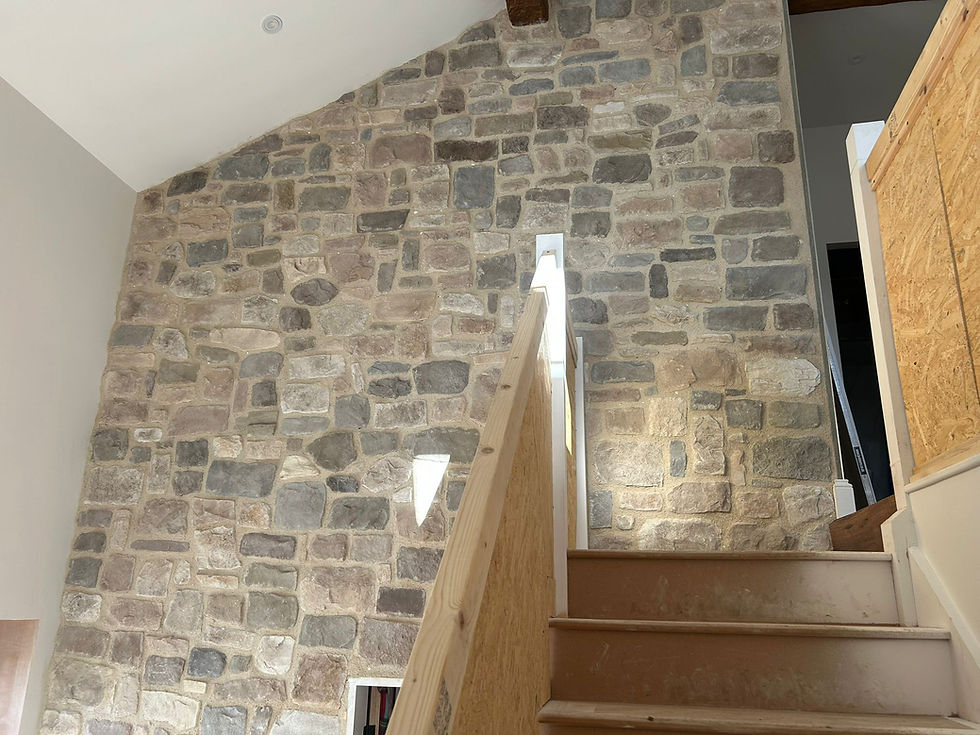
Stone slips are thin, individual pieces of natural stone applied one by one to a wall. This traditional method allows for more creative freedom in design. Each slip can be placed to create patterns, textures, or a rustic, hand-laid look.
Installing stone slips takes more time and skill. The mason must carefully fit each piece to maintain a consistent finish. This method suits smaller, detailed areas like fireplaces, feature walls, or restoration projects where a natural, varied appearance is desired.

Benefits of Stone Slips
Greater design flexibility and customization
More organic, varied finish with natural stone textures
Perfect for detailed or smaller areas
Traditional craftsmanship look
Easier to match irregular surfaces or shapes
Comparing Installation Processes
The installation process is a major factor when choosing between panels and slips. Panels arrive ready to fit together, so installers can quickly attach large sections to walls using mechanical fixings and adhesives. This reduces labor time and disruption.
Slips require more thoughtful placement of each stone piece. The installer must apply mortar and adhesive to the wall and set each slip individually, checking alignment and spacing. This process takes longer and demands more skill to avoid uneven joints or gaps.
For example, a 50 square meter exterior wall could take a team just a few days to clad with panels, while the same area with slips might require several weeks.
Aesthetic Differences
Both ZClad panels and slips use real natural stone, so the material’s color, grain, and texture remain authentic. The difference lies in the overall look:
ZClad Panels create a smooth, uniform surface with minimal visible joints, ZClad Plus moreso. This suits modern, minimalist designs where clean lines are important.
Slips offer a more textured, varied appearance. The irregular joints and individual stones give a handcrafted feel that works well in traditional or rustic interiors.
Choosing between these looks depends on your design goals. For a sleek, contemporary facade, panels are often preferred. For a cozy, natural interior wall, slips provide warmth and character.
Practical Considerations
When deciding, consider these practical points:
Project size: ZClad Panels save time on large areas. Slips suit smaller or detailed spaces.
Budget: Panels usually cost less in labor but have higher material costs in some cases. Slips require more skilled labor, increasing installation expenses.
Surface type: Panels need flat, even surfaces for proper fitting. Slips can adapt better to uneven or curved walls.
Maintenance: Both options are durable, but panels’ fewer joints may reduce dirt buildup and cleaning effort.
Examples of Use
ZClad Panels: A new office building’s exterior, where speed and uniformity are priorities.
Stone Slips: A custom fireplace surround in a home, where the natural variation enhances the design.
ZClad Panels: Large retail store interiors needing a consistent stone finish.
Stone Slips: Renovation of a historic building, matching original stonework patterns.
Final Thoughts on Choosing ZClad Panels or Stone Slips
Choosing between natural stone cladding panels and slips depends on your project’s size, design, timeline, and budget. Panels offer a fast, clean, and consistent finish ideal for large, modern projects. Slips provide flexibility and a handcrafted look suited to smaller, detailed areas or traditional styles.
Evaluate your priorities carefully. If speed and uniformity matter most, panels will likely meet your needs. If you want a unique, textured finish with design freedom, stone slips are the better choice. Both options bring the timeless beauty of natural stone to your walls, enhancing your space with texture and depth.


Comments