
Stone Cladding and Building Regulations: What Applies and What Doesn’t

Natural stone cladding has become a popular choice for enhancing both the interior and exterior of buildings. Despite its growing use, many homeowners and builders wonder if stone cladding must comply with building regulations. This post clarifies when regulations apply, what you need to consider, and how to ensure your stone cladding project is safe and compliant.
Understanding Stone Cladding and Its Role
Stone cladding usually consists of thin stone slips or panels attached to a building’s surface. Unlike solid stone walls, cladding acts as a decorative layer rather than a structural component. This distinction is important because building regulations often focus on structural safety, fire protection, and energy efficiency.
For many residential projects, stone cladding is simply a surface finish. Examples include:
Internal feature walls
Fireplace surrounds
Small external walls or garden features
In these cases, cladding does not affect the building’s structural integrity, so building regulations typically do not apply.
When Building Regulations Apply to Stone Cladding
There are situations where stone cladding must meet building regulations. This usually happens when cladding is part of a larger wall system or influences the building’s performance. Key scenarios include:
New build homes where cladding covers full external walls
Projects involving insulation behind the cladding
Multi-storey buildings where fire safety is critical
In these cases, regulations focus on two main areas: thermal performance and fire safety.
Thermal Performance Requirements
Building regulations include standards for energy efficiency, often referred to as Part L in the UK. When stone cladding is installed with insulation, the entire wall system must meet minimum thermal performance levels. This means:
Insulation materials must be suitable and correctly installed
The cladding system should not create thermal bridges or gaps
The finished wall must meet U-value requirements (a measure of heat loss)
Failing to meet these standards can lead to heat loss, higher energy bills, and potential legal issues.
Fire Safety Considerations
Fire safety is a critical concern, especially for external cladding on taller buildings. Natural stone itself is non-combustible, which makes it a safe choice. However, the full cladding system includes adhesives, backing boards, and fixings, which may affect fire risk.
Regulations require that:
Materials used in the cladding system meet fire resistance standards
The installation does not create fire spread risks
Fire barriers or cavity barriers are installed where necessary
For example, after the Grenfell Tower fire tragedy, regulations tightened around cladding materials on high-rise buildings. Even on smaller buildings, it’s essential to check that all components comply with fire safety rules.
Planning Permission vs. Building Regulations
It’s important to understand the difference between planning permission and building regulations:
Building regulations control how a building is constructed or altered to ensure safety and performance.
Planning permission controls what you are allowed to build or change based on local planning policies.
Most stone cladding projects do not require planning permission, especially if they are minor external changes. However, exceptions include:
Listed buildings
Properties in conservation areas
Large-scale external renovations
Always check with your local planning authority before starting work.

Installation Best Practices for Stone Cladding
Even when building regulations do not apply, proper installation is essential for durability and safety. Key points include:
Substrate suitability: The surface must be strong and stable enough to hold the cladding. Common substrates include concrete, brick, or timber frames with appropriate backing.
Correct adhesives and fixings: Use products recommended by the cladding manufacturer to ensure secure attachment.
Moisture management: Proper ventilation and moisture barriers prevent water damage and mold growth behind the cladding.
Expansion joints: Allow for natural movement of materials to avoid cracking or detachment.
Following manufacturer guidelines and industry best practices will help your stone cladding last for decades.
Examples of Stone Cladding Projects and Regulations
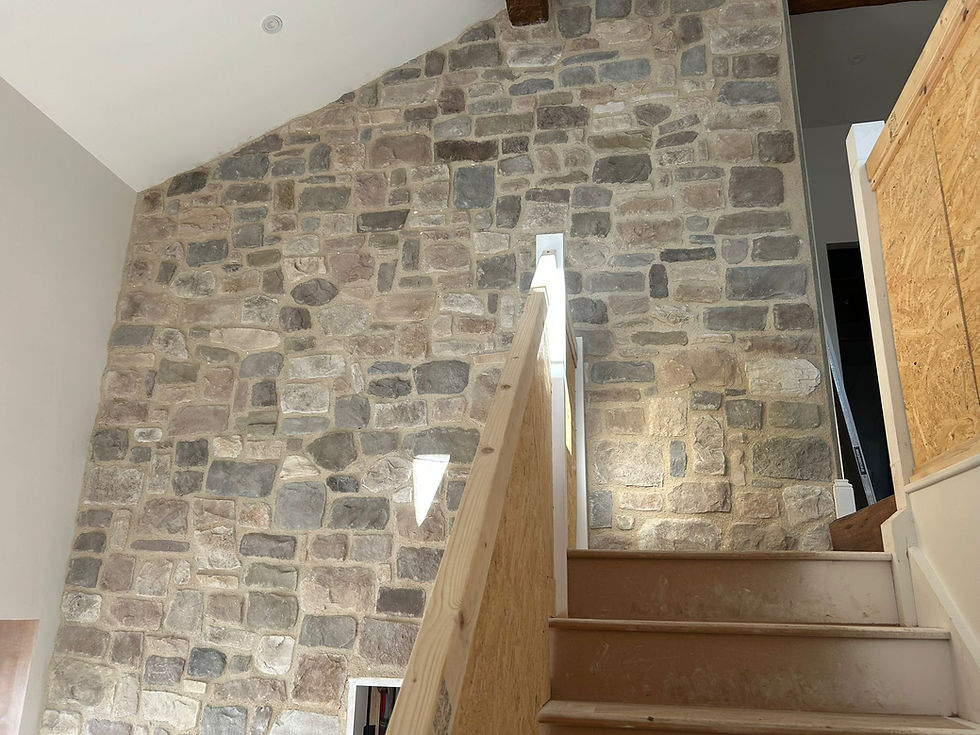
Internal feature wall: A homeowner installs stone slips on a living room wall. Since this is non-structural and internal, building regulations do not apply.
New build external walls: A developer uses stone panels with insulation on a new house. The entire wall system must meet Part L for thermal performance and Part B for fire safety.
Multi-storey apartment block: Stone cladding is installed on the facade. Fire safety regulations require non-combustible materials and fire barriers to prevent fire spread.
These examples show how the context and scale of the project influence regulatory requirements.
Summary and Next Steps
Stone cladding offers a beautiful, natural finish that can enhance any building. For most small-scale residential projects, building regulations do not apply because cladding acts as a decorative surface. However, when cladding is part of a larger wall system, especially on new builds or multi-storey buildings, regulations around thermal performance and fire safety must be followed.
Before starting your stone cladding project, consider these steps:
Check if your project involves insulation or full external walls
Confirm fire safety requirements, especially for taller buildings
Verify if planning permission is needed for your property
Use proper installation methods and materials


Comments