
A Guide For Architects

Updated: Apr 2
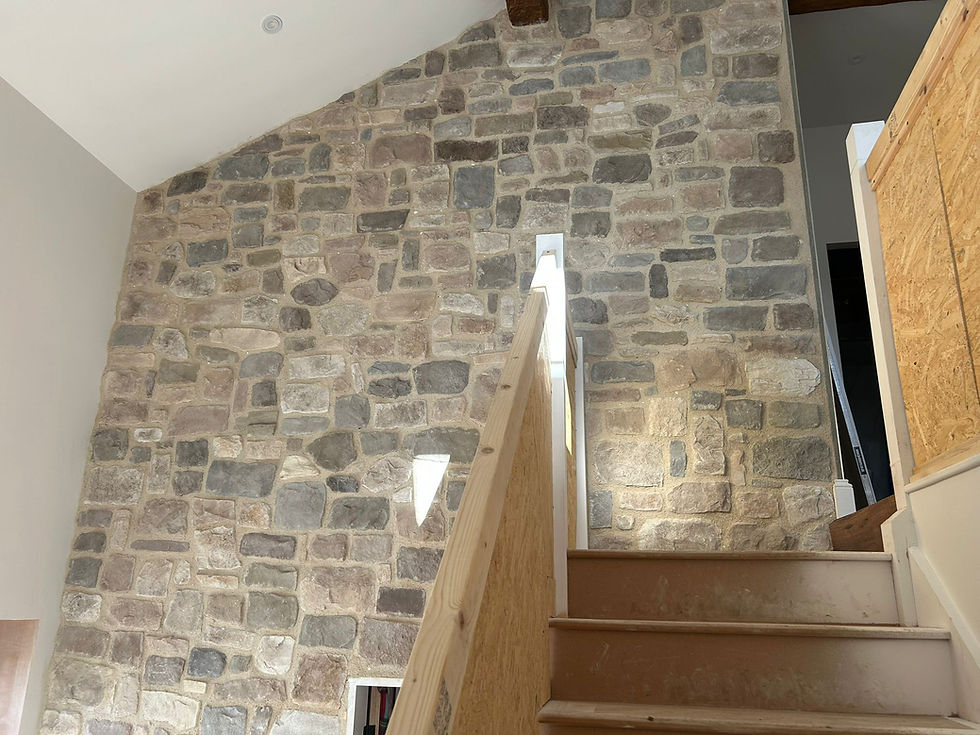
Natural stone cladding has long been prized for its timeless beauty and durability. Yet, natural stone cladding often presents challenges for architects, especially when it comes to structural load and installation complexity. Heavy masonry systems can increase dead loads significantly, complicating structural design and extending project timelines. This guide explores how ZClad panel systems offer a practical alternative, delivering the authentic look of natural stone while reducing weight and simplifying installation. With technical details at the bottom.

Understanding ZClad Panel Systems, Weight and Structural Benefits
ZClad has an installed weight of approximately 85kg per m², with a nominal panel depth of around 48mm. While significantly more efficient than full masonry construction, this remains a substantial load and must be considered during structural design.
It is essential that the chosen substrate is capable of supporting the imposed dead load, adhesive bond, and any required mechanical restraint. Substrate integrity, fixing centres and board specification should be confirmed in line with the project’s structural engineer’s guidance.
Where traditional masonry may not be viable due to structural limitations, ZClad can be installed over appropriate backing systems such as ZBoards, creating a stable carrier surface. This opens up stone cladding opportunities on frame systems that would not typically accommodate full-depth stone, including:
TFS – Timber Framed Structures
SFS – Steel Framing Systems
LGS – Light Gauge Steel
ICF – Insulated Concrete Formwork
By combining ZClad with a correctly specified board system, architects can achieve a natural stone cladding on lighter structural forms while maintaining buildability.
As with all cladding systems, final suitability should be verified against the complete wall build-up and structural calculations.
Fixing Methods
Before installation, substrates must be sound, level, and free from contaminants to ensure proper adhesion. The panels are fixed using a polymer-modified adhesive, with coverage of approximately 2.5 square meters per 20-kilogram bag. Where necessary, mechanical restraints provide additional security, especially in high-wind or high-traffic areas.
This combination of adhesive and mechanical fixing balances ease of installation with long-term durability. Architects should specify substrate preparation and fixing methods clearly in project documentation to avoid installation issues.

Detailing for a Natural Finish
Achieving a seamless natural stone appearance requires careful attention to detailing. ZClad includes pre-formed interlocking corner units that replicate natural stone returns, supplied in boxes covering 0.43 linear meters.

At window and door openings, as well as where the stone meets render or other materials, movement joints should align with structural breaks to accommodate building movement. Drip details must be maintained to prevent water ingress and staining.
These details ensure the stone cladding performs well over time while preserving the visual integrity of natural stone.
Applications Where ZClad Excels
ZClad is particularly well suited to:
Residential developments where weight limits restrict traditional masonry
Mixed-material façades combining stone with metal, glass, or timber
Retrofit schemes aiming to add stone aesthetics without structural upgrades
Feature walls and plinths requiring natural stone appearance with faster installation
By reducing dead load and simplifying installation, ZClad expands design possibilities while maintaining the prestige and durability of natural stone.
Final Thoughts
Specifying stone cladding without compromising structural integrity is a common challenge for architects. ZClad panel systems offer a practical solution by combining the authentic look of natural stone with reduced weight and streamlined installation. This approach supports innovative façade designs, cost-effective construction, and compliance with safety standards.
Architects should consider ZClad early in the design process, ensuring substrates, fixing methods, and detailing align with project requirements. Doing so unlocks the benefits of natural stone aesthetics without the typical structural and programme constraints.
ZClad – Technical Summary
Panel Sizes
Flat panel: 600mm x 215mm (approx. 10kg per panel)
Corner panel: 350mm x 150mm x 215mm
Coverage & Weights
Flat Panels
1 panel = 0.12m²
1 box = 0.36m²
1 pallet (32 boxes) = 11.35m²
Weight per m² ≈ 80–85kg
Pallet weight ≈ 895kg net (925kg gross)
100m² ≈ 8 pallets + 22 boxes
Corner Panels
1 crate = 40 corners = 17.2 linear metres
1 linear metre ≈ 0.4m² coverage equivalent
Crate weight ≈ 830kg net (850kg gross)
1 box (2 pieces) ≈ 20.5kg
Fire Rating
Class A1
Non-combustible
Substrate Requirements
Minimum 12mm cement particle board (CPB / cement backer board)
Combined system load: ≈85kg/m² (cladding) + approx. 15kg/m² (board)
Boards fixed to timber or metal framing at 300mm centres
Substrate must be approved by a qualified structural engineer
Suitable Substrates
Concrete
Breeze block
Thermalite
SFS / LGS systems (engineer specified)
Not Suitable
Plasterboard alone (insufficient load capacity)
OSB without structural verification
Important Installation Notes
Do not bridge expansion or control joints
Terminate installation at movement joints
Treat each section independently


Comments